The Complete Guide to Chimney Inspections in Birmingham, MI
A chimney is one of the most important safety features in your home, yet many homeowners overlook its maintenance. Regular chimney Inspections are the foundation of a safe, efficient fireplace or wood stove. Whether you use your chimney seasonally or year-round, understanding what a professional Inspection involves helps you make informed decisions about your home's safety. This guide covers everything Birmingham-area homeowners need to know about chimney Inspections, from why they matter to what happens during the process. We'll explain common issues inspectors look for and help you understand when your chimney needs attention.
Why Chimney Inspections Matter for Birmingham Homeowners
Chimneys face harsh conditions throughout the year. Temperature swings, moisture, creosote buildup, and weather exposure all take their toll. A chimney that appears fine from the outside may have serious problems hidden inside.
Regular Inspections catch problems early, before they become expensive repairs. They also ensure your chimney operates safely and efficiently. The National Fire Protection Association (NFPA) recommends annual Inspections for chimneys that are in use, and many insurance companies require documented Inspections.
Beyond safety, Inspections protect your investment. A well-maintained chimney lasts longer and performs better, keeping your home warm and comfortable while reducing energy waste.
Understanding the Three Levels of Chimney Inspections
Not all Inspections are the same. The NFPA defines three Inspection levels, each serving a different purpose.
Level 1 [Inspection](/inspection) is the most basic visual Inspection. The inspector examines the accessible parts of your chimney, including the firebox, damper, smoke chamber, and exterior. This is typically recommended annually for chimneys in regular use. Level 1 Inspections don't require special equipment and are the most affordable option.
Level 2 [Inspection](/inspection) goes deeper. In addition to Level 1 components, the inspector uses specialized equipment to examine areas not visible during a basic Inspection. This level is recommended when buying a home, after chimney fires, or if damage is suspected. Level 2 Inspections often include Video Camera [Inspections](/video-camera-Inspections) to see inside the flue.
Level 3 [Inspection](/inspection) is the most comprehensive and invasive. It involves removing portions of the chimney structure to access areas that can't be seen otherwise. This is rarely needed but may be necessary if structural damage is suspected.
Most homeowners benefit from annual Level 1 Inspections combined with a Level 2 Inspection every few years or when issues arise.
What Inspectors Look for During a Chimney Inspection
Professional inspectors examine multiple aspects of your chimney system. Understanding what they check helps you appreciate the thoroughness of the process.
Creosote Buildup is one of the most important concerns. Creosote is a flammable byproduct of burning wood that accumulates inside the flue. When creosote builds up, it increases fire risk significantly. Inspectors assess creosote levels and recommend Cleaning) if necessary. Heavy creosote buildup is one of the primary reasons chimney fires occur.
Structural Integrity is critical. Inspectors look for cracks, deterioration, or separation in the chimney structure. Damaged mortar joints, spalling bricks, and compromised liners all pose safety risks. These issues allow heat and gases to escape into surrounding wood framing, creating fire hazards.
Flue Condition determines whether smoke and gases exit properly. A damaged or partially blocked flue can cause backdrafting, where smoke enters your home instead of exiting outside. Inspectors check for blockages, damage, or deterioration that affects flue performance.
Damper Operation ensures your chimney can be properly sealed when not in use. A faulty damper wastes energy by allowing conditioned air to escape. Inspectors verify the damper opens and closes smoothly and seals properly.
Chimney Cap and Crown protect your chimney from weather and animals. Missing or damaged caps and crowns allow water, birds, and debris inside. These components are essential for long-term chimney health.
Combustion Air Supply affects how efficiently your fireplace operates. Inspectors verify that your chimney has adequate air supply for proper combustion.
Common Issues Found During Birmingham-Area Chimney Inspections
Understanding typical problems helps you recognize when your chimney needs attention between Inspections.
Water damage is extremely common in Michigan. Freeze-thaw cycles crack mortar and brick, and water intrusion can damage the chimney structure and surrounding wood. Proper Protection) services help prevent water-related damage.
Creosote buildup from wood burning is a leading cause of chimney fires. Regular Cleaning prevents dangerous accumulation.
Animal intrusions occur frequently, especially as seasons change. Birds, raccoons, and squirrels nest in chimneys, creating blockages and fire hazards.
Deteriorating mortar and bricks need attention before they become structural problems. This is particularly important in older Birmingham homes where chimneys may be decades old.
Damaged or missing chimney caps and crowns leave your chimney vulnerable to weather and pests.
Video Camera Inspections: Seeing Inside Your Chimney
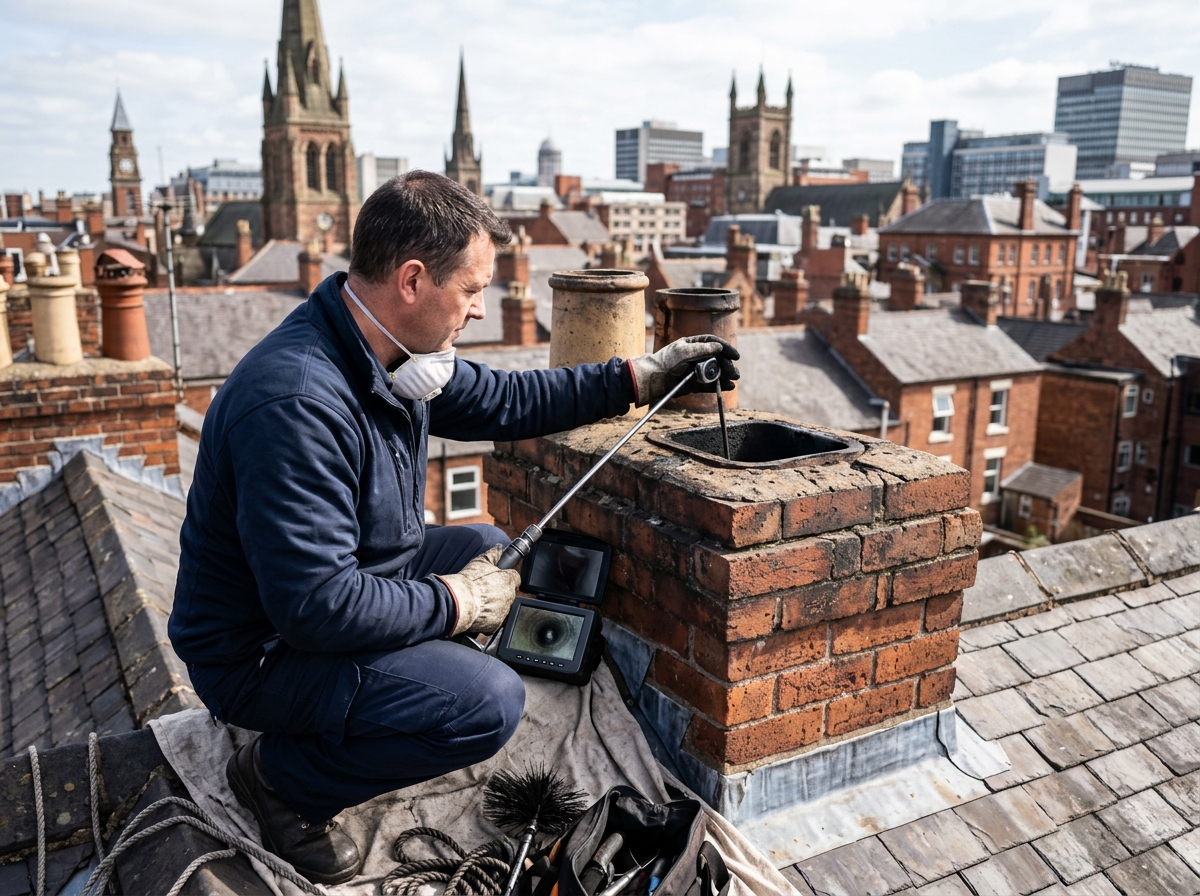
Modern Video Camera [Inspections](/video-camera-Inspections) provide clarity that traditional Inspections can't match. A small camera travels up the flue, displaying real-time video on a monitor. This technology reveals creosote buildup, cracks, blockages, and other issues that might otherwise go undetected.
Video Inspections are particularly valuable for identifying hidden damage, assessing creosote levels accurately, and documenting the chimney's condition. Many homeowners appreciate receiving a recording they can review and keep for their records.
Chimney Reinforcement: Addressing Inspection Findings
When Inspections reveal structural issues, Reinforcement) services restore safety and functionality. Reinforcement options range from mortar repointing to flue liner installation, depending on the damage severity.
Flue liners are particularly important. They create a safe, sealed passage for smoke and gases. If the original liner is damaged, a new liner protects your home and improves efficiency.
How Often Should You Have Your Chimney Inspected?
The NFPA recommends annual Inspections for chimneys in use. However, specific circumstances may warrant more frequent Inspections.
If you use your fireplace regularly, annual Inspections catch creosote buildup before it becomes dangerous. If you've experienced a chimney fire, an Inspection is essential to assess damage before using the chimney again.
New homeowners should have a Level 2 Inspection to understand the chimney's condition. If you haven't had your chimney inspected in several years, scheduling one soon is wise.
Preparing for Your Chimney Inspection
A few simple steps prepare your home for Inspection day. Clear the fireplace of ash and debris. Move furniture away from the fireplace to give the inspector space to work. If you have pets, consider containing them in another area to prevent distraction.
Have questions ready. Professional inspectors welcome questions about their findings and recommendations. This is your opportunity to understand your chimney's condition and learn about maintenance.
Why Choose Santa's Chimney Sweeps for Your Birmingham Inspection
Santa's Chimney Sweeps serves Birmingham, Beverly Hills, Bloomfield Township, Bloomfield Hills, West Bloomfield, and surrounding Oakland, Macomb, and Wayne County areas. Our team brings years of experience inspecting and maintaining chimneys throughout Michigan.
We perform thorough Level 1 and Level 2 Inspections using modern equipment, including video camera technology. Our inspectors identify issues early and explain findings clearly, helping you understand your chimney's condition and necessary next steps.
Whether your chimney needs Cleaning), Protection), or Reinforcement), we have the expertise to help. We're committed to keeping Birmingham-area homes safe and comfortable.
Chimney Inspections are an investment in your home's safety, efficiency, and longevity. Regular Inspections catch problems before they become dangerous or expensive. By understanding what inspectors look for and why annual Inspections matter, you can make informed decisions about your chimney's care. Santa's Chimney Sweeps makes scheduling your Inspection simple. Our professional team in Birmingham and surrounding areas is ready to assess your chimney and answer your questions. Contact us today to schedule your Inspection and ensure your chimney is safe for the season ahead.